Categories
Ravishing Rose Blog Intersectional Identity A Quest for Healing Power Bicycles

Redefining Social Power:

Why Introverts Might Be the Most Connected People You Know

Introversion is often misunderstood as the trait of someone that solely recharges alone. This is actually only part of the story. Introvert leaning folks also thrive in certain types of social settings.

The Cloak the Mind Makes

There are lots of backstories for introversion — some of it is simply how we were born — but there are also additional factors that can lead to feeling safer in specific environments. As a trauma therapist, I am inclined to focus on these.

A lingering symptom of trauma is the sense that we are broken, ruined, or “not ok” and these types of feelings can lead to a felt experience of isolation. Combine that with a deeply divided society, a sensitivity to over-stimulation, and/or a chronic illness and it can sometimes feel almost impossible to make friends.

I have spent a lifetime combating my own sense of isolation — and I say “sense” with deep intention, because it is a story that my mind will spin regardless of the actuality of my reality. The more honest I have been able to be with myself about who I am, the more I am able to recognize isolation webs as a protective cloak that my mind fabricated a long time ago to keep me safe and cozy when my internal alarm bells are ringing.

This is the story of what I’ve learned in order to hang the cloak in the closet — or at least take it to the laundrymat for a wash.


The Morning Ride

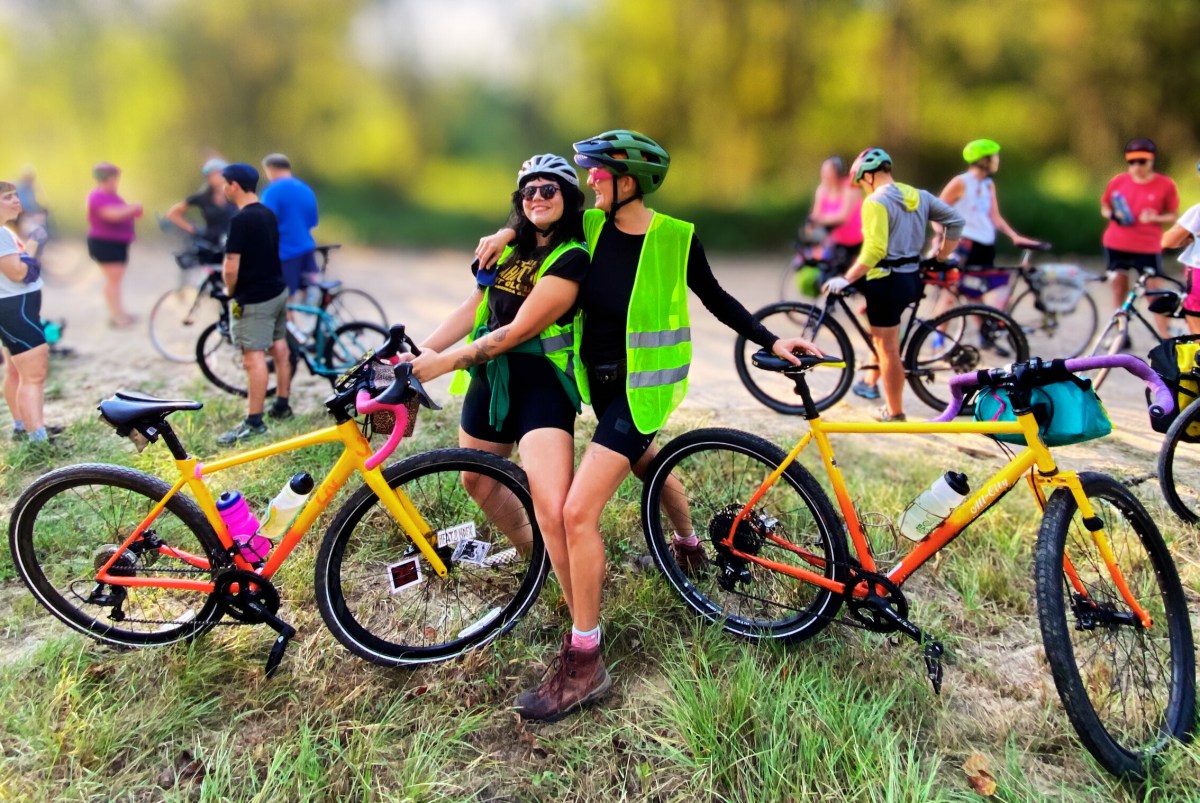
My peak socializing energy is definitely in the morning or during the day and the perfect setting for me is a quiet and comfortable space. Being outdoors is a plus — sunshine or rain I am a bicycle fanatic and I will enjoy my time on two wheels with whomever is willing to join me.

I realized recently, after experiencing some FOMO around missing an interesting evening event, that I was discounting this type of socialization because in my mind, evening socialization is the most “valid” kind of social experience. Catching myself perpetuating this storyline helped me pull a thread from that cloak.

The next morning, after the aforementioned FOMO, I got up early for a ride with a friend who’s also been feeling some social isolation, and we connected over this very topic. We connected. We rode our bicycles in the sunshine, along the water and spoke about our shared experience of the world. What noisy, overstimulating, chaotic evening outing could replace that?


We Are Not Alone in Our Aloneness

Another common trap that I find myself tangled within is the story that everyone else already has the friends they want. Good/bad news: I have lots of evidence that there are plenty of people out there dreaming of deeper connection.

When we are feeling isolated, we are likely to become more attuned to noticing folks that are in connection — so that we can silently shame ourselves for our own shortcomings. The reality is that if we turn our gaze even slightly to the right we might notice someone else longingly gazing at that very same connection we are coveting.


Living with Chronic Illness

Adding a chronic illness to the menagerie of life makes things even more exciting. The illness itself may or may not respond to treatment and we may or may not have the means/energy/ability to manage it at any given point in time and life. We are at the will of this force that we coexist with.

Living with a chronic illness means that my social life has been more creative than conventional. At times I grieve the things I might be doing if I was well enough — but once the clouds clear, I realize how it has helped me focus on the relationships that matter to me. I put the energy I have into helping these buds blossom and ultimately I feel more satisfied and loved than ever before. Performance is less of an option and that isn’t necessarily a loss.

The practical upshot of all of this, for me, has been learning to extend the same flexibility to my social self that I have slowly learned to extend to my body. That means saying yes to the morning ride and no to the evening event — without the accompanying shame spiral.

It means being honest with people I trust about what I can and cannot do, and noticing — with some surprise — that this very honesty tends to bring people closer rather than push them away. It means recognizing that a two hour conversation on a porch is not a consolation prize for a night out. It is, for me, the whole point.

Categories
A Quest for Healing Power Ravishing Rose Blog

The Power Imbalance of Giving & Receiving

I have to start with Martin & Dalzen’s (2021) Wheel of Consent when I talk about giving and receiving because it highlights the vulnerability and energetic structure of being in different roles of interpersonal exchange. This became apparent to me when I noticed a pattern of women positioning themselves in a relationship towards me as being the giver of care, advice, or mentorship without that being an agreed dynamic. I recognize these behaviours, as much as I have a reaction to judge them, and see them in myself (something I don’t want to look at) as part of a socialized way to feel in control of a situation.

I love being in control. And I, sometimes, recognize it’s illusion: Being ‘better than’ others, having something to offer, feeling of value in a dynamic. I just listened to a recent podcast by Tara Brach about the drive to feel inferior or superior. She has some interesting exercises to reprogram your brain around disconnection and isolation. The positioning of myself as a “giver of care” without fee for exchange (as in a work setting), allows me to feel superior because my health, the measurement at hand, is being communicated as if I were in better condition that the caregivee.

I recognize the urge as my ego and I negotiate who’s in charge. I’ve also learned in past year that, if I catch my ego, it can be a choice on my part as to whether or not to engage in this power struggle. Someone may try to position themselves and if my ego takes over I can physically feel this power struggle in my body, but when I am aware of myself and don’t allow the reactionary action/word/energy to dominate, then I can disengage and remain on an even playing field with the other being.

This is hard in our interpersonal interactions, there’s a lot going on. So I wonder about Brach’s take as she navigates negotiating this power dynamic with other energetic beings such as plants and animals. Our ‘natural setting’ as humans is to dominate these relationships, animals and nature are often domesticated to our habits. What would happen if we simply acknowledge and honour the ways in which our cat takes up space in ways we don’t prefer or a tree root destroys our sewer system? We don’t have to like it, but we can notice that this is how we live in harmony with one another.

It is my desire to grow into being on this earth in a way that honours my surrounding beings. We are all of the same atoms, the same stardust and, I believe, essentially seeking the same harmony of existence. What relationships come to mind for you when you think about this?

Photo by Casey Horner on Unsplash

Categories
A Quest for Healing Ravishing Rose Blog

When the Mind Wanders Off Leash: The Fantasizing Mind

A handful of recent experiences have led me to reflect upon my relationship to fantasy. You know when a theme keeps popping up in different areas of your life? Time to pay attention? The act of fantasizing is such an interesting exercise and generally considered to be a positive, exploratory or sexy activity, though also considered mysterious and sometimes even dangerous. When we fantasize we might be using our imagination to create future goals for ourselves but we also might be trying to escape whatever discomfort we are experiencing in the moment. Fantasy can be realistic or fantastical, it can be something we truly want or perhaps, and we might not recognize this, it remains pleasant only in confines of our mind. The mind is a truly creative place and a tool that we share across oceans, languages and cultures.

There are a few ways in which I have come to notice fantasy getting the better of me. The first one is believing that a situation or relationship would only be better if this or that were different. If only my friend/boss/partner were a slightly different person, if only we related in this other specific way. This is a trap. They will, very likely, never become that person and this habit of discontent is something that has deeper meaning within me rather than the individual in question.

A second way I’ve noticed fantasy popping up is a little more sadistic. I will fantasize a particular future outcome or vengence if I am in conflict with someone. It has more of a stonewalling or emotional torture type of flavor for me. I caught myself doing this last week with my one of my partners and realized that it was helping me cope with the discomfort of being in conflict. I also recognized that the chances of me following through on this fantasy that took place hours later was pretty slim. The chances of me still being angry about something small after a whole day apart was pretty unlikely.

Finally, the one you’ve been waiting for, using fantasy to explore sexuality. I can’t help but think about the ethics of consent when I think about others sexually cause that’s how I roll. How would this person feel about being a part of my fantasy world? Sometimes we know because we are already in relationship with the person and we can ask directly. There are other times when it’s someone we don’t have a connection with, we might fantasize about them regularly, and it could possibly disrupt a potential connection because, after a certain point, we can have trouble separating fact from fiction.

While fantasy can be fun, relieving and an essential part of creativity, there are ways in which it can wander beyond what aids us in living the life that we hope for ourselves. It is my desire that by identifying the ways in which it might go awry, I can catch myself and start to utilize my fantastical skills for fun, exploration and the deepening of connections.

Categories
A Quest for Healing Bicycles Intersectional Identity Ravishing Rose Blog

Sorting Axle Nuts

Yesterday I sorted axel nuts. A task I initially felt was a waste of time and was I really getting paid to sort? But it reminded me of the beginnings of being a mechanic. Coop days where a volunteers task was to sort. There’s a TON to learn from sorting parts. There are lots of unique differences between axle nuts in fact. There’s also some humility needed since I associate it with the start of my learning and I was divided between nostalgia and ego.

But back to the nuts. There’s obviously size differences and then thread pitch is the next step to consider. But my axle nut chart, {picture to come as reference}, only has so much range with its 6 options (3 difference circumferences and 3 difference pitches). Some nuts were too big and some too small so I could use the discernment of my eye to weed them out in the beginning (e-bikes for the larger nuts and vintage bikes for the smaller). Recently I encountered an axle nut that didn’t fit a 13 or 12 mm wrench in the collection of standard bike tools. “An imperial size,” my spouse chipped in. The nut was so thin and fragile and stuck that an adjustable was mangling it 😥 .

If you’ve enjoyed the article this far, “Congratulations!”, you’re a huge nerd like me. Maybe you like to get dirty, take things apart or some other obscure thing I can’t think of. Feel free to email me about it and I will add you to my email list once I get that going. Where I want to go with all of this is into the human mind. What do axle bolts have to do with the mind?

This kind of focus on the details of small hardware allows me to relax. Paying attention to the feel of the nut screwing onto the chart, using my sight to assess whether it needs to go into another bin for cone parts, and smelling the old grease and grit that coats them all is an immersive experience. The feeling of not being enough being humbled through a simple task of sorting, unlocking a sort of flow or meditative state.

It is through the work of my hands that I can continue to do the work of the mind and I’m often wondering how they are more and more combined in my life. How do bikes fit with therapy? What can I use from my therapy training to assist me as a mechanic? Have they already combined into the opportunities I’ve had, the experiences I’ve made, the communities I’ve mingled with? I desire that you see yourself as whole, through the lens of many combined identities.