Categories
Ravishing Rose Blog Intersectional Identity A Quest for Healing Power Bicycles

Redefining Social Power:

Why Introverts Might Be the Most Connected People You Know

Introversion is often misunderstood as the trait of someone that solely recharges alone. This is actually only part of the story. Introvert leaning folks also thrive in certain types of social settings.

The Cloak the Mind Makes

There are lots of backstories for introversion — some of it is simply how we were born — but there are also additional factors that can lead to feeling safer in specific environments. As a trauma therapist, I am inclined to focus on these.

A lingering symptom of trauma is the sense that we are broken, ruined, or “not ok” and these types of feelings can lead to a felt experience of isolation. Combine that with a deeply divided society, a sensitivity to over-stimulation, and/or a chronic illness and it can sometimes feel almost impossible to make friends.

I have spent a lifetime combating my own sense of isolation — and I say “sense” with deep intention, because it is a story that my mind will spin regardless of the actuality of my reality. The more honest I have been able to be with myself about who I am, the more I am able to recognize isolation webs as a protective cloak that my mind fabricated a long time ago to keep me safe and cozy when my internal alarm bells are ringing.

This is the story of what I’ve learned in order to hang the cloak in the closet — or at least take it to the laundrymat for a wash.


The Morning Ride

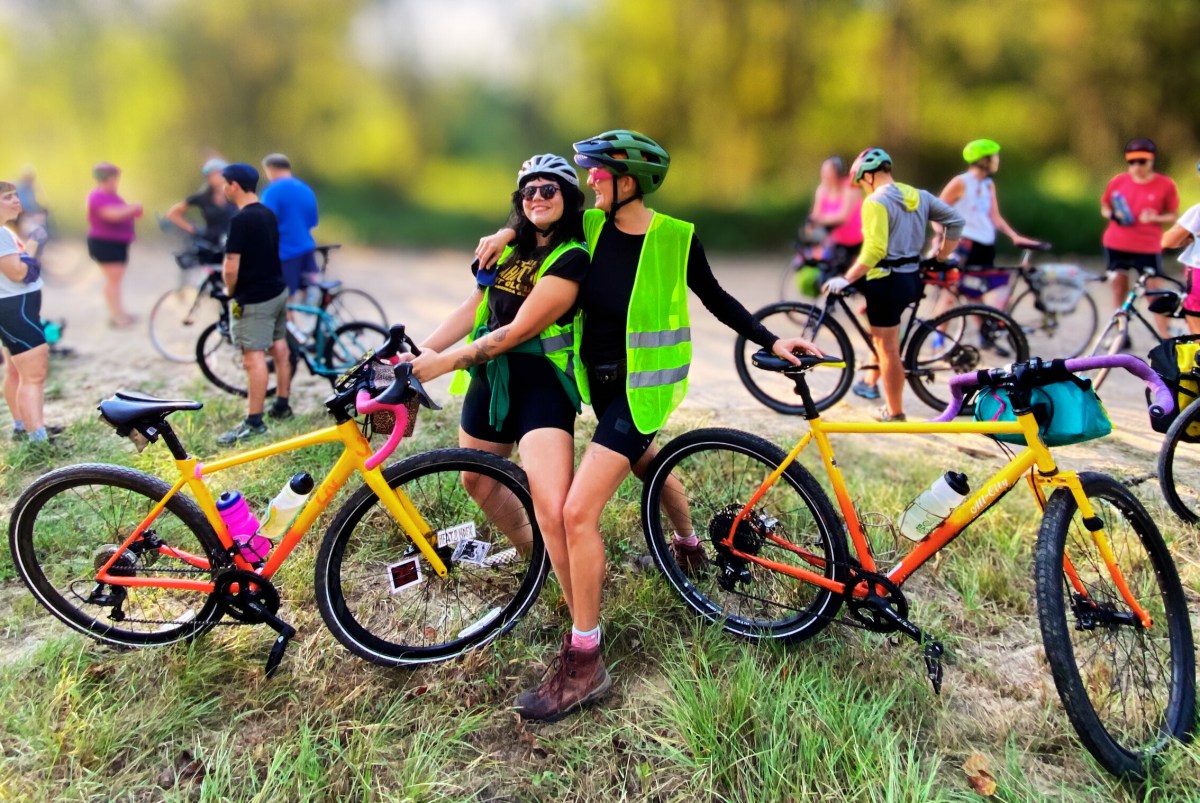
My peak socializing energy is definitely in the morning or during the day and the perfect setting for me is a quiet and comfortable space. Being outdoors is a plus — sunshine or rain I am a bicycle fanatic and I will enjoy my time on two wheels with whomever is willing to join me.

I realized recently, after experiencing some FOMO around missing an interesting evening event, that I was discounting this type of socialization because in my mind, evening socialization is the most “valid” kind of social experience. Catching myself perpetuating this storyline helped me pull a thread from that cloak.

The next morning, after the aforementioned FOMO, I got up early for a ride with a friend who’s also been feeling some social isolation, and we connected over this very topic. We connected. We rode our bicycles in the sunshine, along the water and spoke about our shared experience of the world. What noisy, overstimulating, chaotic evening outing could replace that?


We Are Not Alone in Our Aloneness

Another common trap that I find myself tangled within is the story that everyone else already has the friends they want. Good/bad news: I have lots of evidence that there are plenty of people out there dreaming of deeper connection.

When we are feeling isolated, we are likely to become more attuned to noticing folks that are in connection — so that we can silently shame ourselves for our own shortcomings. The reality is that if we turn our gaze even slightly to the right we might notice someone else longingly gazing at that very same connection we are coveting.


Living with Chronic Illness

Adding a chronic illness to the menagerie of life makes things even more exciting. The illness itself may or may not respond to treatment and we may or may not have the means/energy/ability to manage it at any given point in time and life. We are at the will of this force that we coexist with.

Living with a chronic illness means that my social life has been more creative than conventional. At times I grieve the things I might be doing if I was well enough — but once the clouds clear, I realize how it has helped me focus on the relationships that matter to me. I put the energy I have into helping these buds blossom and ultimately I feel more satisfied and loved than ever before. Performance is less of an option and that isn’t necessarily a loss.

The practical upshot of all of this, for me, has been learning to extend the same flexibility to my social self that I have slowly learned to extend to my body. That means saying yes to the morning ride and no to the evening event — without the accompanying shame spiral.

It means being honest with people I trust about what I can and cannot do, and noticing — with some surprise — that this very honesty tends to bring people closer rather than push them away. It means recognizing that a two hour conversation on a porch is not a consolation prize for a night out. It is, for me, the whole point.

Categories
A Quest for Healing Bicycles Intersectional Identity Ravishing Rose Blog

Sorting Axle Nuts

Yesterday I sorted axel nuts. A task I initially felt was a waste of time and was I really getting paid to sort? But it reminded me of the beginnings of being a mechanic. Coop days where a volunteers task was to sort. There’s a TON to learn from sorting parts. There are lots of unique differences between axle nuts in fact. There’s also some humility needed since I associate it with the start of my learning and I was divided between nostalgia and ego.

But back to the nuts. There’s obviously size differences and then thread pitch is the next step to consider. But my axle nut chart, {picture to come as reference}, only has so much range with its 6 options (3 difference circumferences and 3 difference pitches). Some nuts were too big and some too small so I could use the discernment of my eye to weed them out in the beginning (e-bikes for the larger nuts and vintage bikes for the smaller). Recently I encountered an axle nut that didn’t fit a 13 or 12 mm wrench in the collection of standard bike tools. “An imperial size,” my spouse chipped in. The nut was so thin and fragile and stuck that an adjustable was mangling it 😥 .

If you’ve enjoyed the article this far, “Congratulations!”, you’re a huge nerd like me. Maybe you like to get dirty, take things apart or some other obscure thing I can’t think of. Feel free to email me about it and I will add you to my email list once I get that going. Where I want to go with all of this is into the human mind. What do axle bolts have to do with the mind?

This kind of focus on the details of small hardware allows me to relax. Paying attention to the feel of the nut screwing onto the chart, using my sight to assess whether it needs to go into another bin for cone parts, and smelling the old grease and grit that coats them all is an immersive experience. The feeling of not being enough being humbled through a simple task of sorting, unlocking a sort of flow or meditative state.

It is through the work of my hands that I can continue to do the work of the mind and I’m often wondering how they are more and more combined in my life. How do bikes fit with therapy? What can I use from my therapy training to assist me as a mechanic? Have they already combined into the opportunities I’ve had, the experiences I’ve made, the communities I’ve mingled with? I desire that you see yourself as whole, through the lens of many combined identities.

Categories
A Quest for Healing Bicycles Intersectional Identity Ravishing Rose Blog

Healing and Bicycles

Bicycles have been a part of my life for a long time. Somewhere, my parent’s have a photo of me at 8 or 9 balancing a pool noodle on my helmet while riding. I also fondly recall riding my cat (Sneezy) around my cul-de-sac in my backpack, much to her protesting. But bicycles didn’t become as integral to my life until I started learning how to work on them mechanically. This process began during my undergrad degree where there was a bike cooperative (Right to Move) attached to the downtown campus of my school in Montreal. I still remember going inside the coop for the first time and feeling very out of place, but also curious and intrigued.

It wasn’t until a couple of years later when my path to becoming a professional mechanic was clear. Another city (Toronto) and coop (Bike Pirates) later, a friend of mine named Matt handed me a bike frame with only the cranks and brakes attached and told me to build. I looked at him deploringly and said I didn’t know how. A few days and several hours of laboring later, Esmerelda was born. I sold her off a several years later in Victoria, BC so she may still be rolling around!

I will never forget Esmerelda. After the build, I started bike couriering in Toronto which will also remain an unforgettable endeavour. I remember stopping at my friend Heather’s (former courier) place on my way home from work and lying on her kitchen floor shovelling in some bulk peanuts she just purchased before she politely took the bag away from me. I hadn’t yet learned with how much food fuel was needed to do the kind of riding I was doing.

Having been mugged at gunpoint in Montreal when I was 17, it took me over a decade to recover the sense of safety that I grew up feeling. Having a bicycle to rely on, that I could repair on the spot, was an enormous leap of recovery from this experience.

It wasn’t without many trials and tribulations. My first professional shop mentor was a gentleman that was of similar age to my parents and the intimacy of us working together one on one seemed to get some wrong ideas in his head about our connection. I almost quit, but decided to take the opportunity to put him in his place with my words and see what happened. Despite my remaining disappointment and empathy for my younger self, it was an empowering experience. I ended up remaining and learning what I could before I moved on with the relationship in good standing. But this was only one of many deeply sexist and power abusing experiences that I have endured in the world of bicycles in order to get where I am today.

I never set out to be a mechanic, I never thought I would be a mechanic and I certainly never thought that almost 2 decades after Esmerelda I would still be holding a wrench in my hand. These days I’m wrenching (term for doing bike mechanics) so much that if I don’t stretch before bed my body will wake me up in the night to make me. This may also be an element of aging 😛

I am passionate about teaching others how to do this work. This skill set has given me so much joy, community, connection and empowerment throughout my life. It has helped to build my self-esteem, shaped the way I travel and interact with the communities I’ve lived in, and allowed me a sense of safety and security when exploring new places.

I also see learning these, as well as other types of skills, as therapeutic. Sometimes it is helpful to take abstract work in our minds out into the physical world to labor over with our hands and our eyes until we can make sense of it all. It has long been a desire of mine to combine my work as a therapist with my work as a bicycle mechanic. It is also my desire that you feel capable to learn something that you otherwise thought might not have been possible. If you have a similar experience where a skillset chose you instead of the other way around, feel free to share in the comments below.

Photo by Marija Zaric on Unsplash