Categories
A Quest for Healing Intersectional Identity Ravishing Rose Blog

Parts of Me: Elsa

I’ve been feeling stuck lately and having a hard time writing. When I reflect on my stuck feelings…I feel frozen, a sense of impending doom if I make some wrong decision, it’s hard to feel my body and when I do it’s mostly just uncomfortable, my mind wants to take over and SOLVE something but mostly doesn’t know where to begin.

I’ll call this experience of stuckness ‘Elsa’. I feel angry with her at the moment. Elsa is getting in the way of my writing, and I LOVE to write. She’s probably also impeding my ability to do other things that feel important and urgent. Why is Elsa dictating how I spend my time? I refuse to let her win.

But what if Elsa is trying to help in some way? What is Elsa’s core intentions? Most often the parts of me that inhibit action tend to be protective. I identify as both a freezer and a fawner when it comes to high stress situations. These responses are protective measures to keep me safe and stop me from escalating any danger that is happening in my vicinity.

Since the pandemic, my vicinity has felt like it expanded a lot further than the North American bubble that I generally, mentally lived in. Elsa came and went for company. When she went away, I furiously covered the walls of my apartment in paintings like my life depended on it despite not identifying as a mural artist, and I watched and waited as a global disease unfolded. There was a level of connectedness with the rest of the world that had begun through my privileged wanderlust and it was both challenged and solidified through the shutting down and reopening of borders. The mandate that had trapped me on the other side of an invisible wall from most of my family challenged the privilege of border crossing I had experienced the entirety of my life.

Elsa supported me through this experience. She turned my brain off when I became overwhelmed by the things I lost before I was mentally too far outside of my window of tolerance. She kept me company during the many, MANY hours of alone time I experienced during the lockdown since I was living alone at the time. She generally helped me pass the time and likely the tension of her departures helped generate the fire of action that comes forth through me in her absence.

What if Elsa is the precursor to action? As I get older, I realize that often the most challenging part of challenging feelings is the judgement I heap upon myself for having the challenging feels in the first place. An unkind way to respond to someone who is already struggling I know. And then Elsa comes to the rescue to shut it all down. She is the emergency switch that takes brain offline until I can find a little thread of compassion for myself.
Categories
Intersectional Identity Power Ravishing Rose Blog

On Hierarchy in Intimate Poly Relationships

We’re talking romantic here, though another piece on friendships would be interesting too. My brain already considered a sub-series of power dynamics about hierarchy before I opened the laptop. It’s important to keep in mind that I don’t believe that relationships can be non-hierarchal. I believe we can strive for equality, but if we ignore the ways in which equality can’t (or intentionally does not) exist then power doesn’t cease to exist.

I go through periods where I immerse myself in short videos of other people’s worlds around the world and so this is what I gathered from my online poly community. Hierarchy is in the way we negotiate finances and how it can impact how much money you spend on a date with another partner. Hierarchy is living together and having down time to chat about other partners, the hierarchy of having more knowledge of others. The hierarchy of knowing a partner longer than another partner. The hierarchy of marriage, having kiddos, sharing property.

None of these are set in stone. We’re a collection of identities that both provide and take away privileges and shift. Consider being a passing trans white man, you have gone from a white woman to what most people will assume is a white man. In some ways, this is an enormous privilege leap while still having been socialized as a woman and retaining that history as well as mental health struggles that can result both from having experienced significant dysmorphia about your body as well as very real fears of being the target of violence politically and in your immediate neighbourhood. Consider being a white cis man that marries this individual, now you are in a queer relationship. How does that impact the way in which you hold power? What situations might result in the experience of more or less power and how might that impact your behaviour?

Power is nuanced, invisible and morphing. There are ways in which it is obvious by a role you are in, think boss/employee or further CEO and entry level employee, and situations in which power might shift depending on the setting you are in despite your relationship to another person. Power is not inherently bad, though many make this conclusion. We are not trying to rid the world of power but more so wield it wisely. It is my desire that we take the time to recognize the ways in which we hold power and use it in ways that align with our values to lift one another up, instead of fearfully taking them down. What are some nuanced ways in which power shows up in your relationship(s)?

Photo by Abed Ismail on Unsplash

Categories
A Quest for Healing Bicycles Intersectional Identity Ravishing Rose Blog

Sorting Axle Nuts

Yesterday I sorted axel nuts. A task I initially felt was a waste of time and was I really getting paid to sort? But it reminded me of the beginnings of being a mechanic. Coop days where a volunteers task was to sort. There’s a TON to learn from sorting parts. There are lots of unique differences between axle nuts in fact. There’s also some humility needed since I associate it with the start of my learning and I was divided between nostalgia and ego.

But back to the nuts. There’s obviously size differences and then thread pitch is the next step to consider. But my axle nut chart, {picture to come as reference}, only has so much range with its 6 options (3 difference circumferences and 3 difference pitches). Some nuts were too big and some too small so I could use the discernment of my eye to weed them out in the beginning (e-bikes for the larger nuts and vintage bikes for the smaller). Recently I encountered an axle nut that didn’t fit a 13 or 12 mm wrench in the collection of standard bike tools. “An imperial size,” my spouse chipped in. The nut was so thin and fragile and stuck that an adjustable was mangling it 😥 .

If you’ve enjoyed the article this far, “Congratulations!”, you’re a huge nerd like me. Maybe you like to get dirty, take things apart or some other obscure thing I can’t think of. Feel free to email me about it and I will add you to my email list once I get that going. Where I want to go with all of this is into the human mind. What do axle bolts have to do with the mind?

This kind of focus on the details of small hardware allows me to relax. Paying attention to the feel of the nut screwing onto the chart, using my sight to assess whether it needs to go into another bin for cone parts, and smelling the old grease and grit that coats them all is an immersive experience. The feeling of not being enough being humbled through a simple task of sorting, unlocking a sort of flow or meditative state.

It is through the work of my hands that I can continue to do the work of the mind and I’m often wondering how they are more and more combined in my life. How do bikes fit with therapy? What can I use from my therapy training to assist me as a mechanic? Have they already combined into the opportunities I’ve had, the experiences I’ve made, the communities I’ve mingled with? I desire that you see yourself as whole, through the lens of many combined identities.

Categories
A Quest for Healing Bicycles Intersectional Identity Ravishing Rose Blog

Healing and Bicycles

Bicycles have been a part of my life for a long time. Somewhere, my parent’s have a photo of me at 8 or 9 balancing a pool noodle on my helmet while riding. I also fondly recall riding my cat (Sneezy) around my cul-de-sac in my backpack, much to her protesting. But bicycles didn’t become as integral to my life until I started learning how to work on them mechanically. This process began during my undergrad degree where there was a bike cooperative (Right to Move) attached to the downtown campus of my school in Montreal. I still remember going inside the coop for the first time and feeling very out of place, but also curious and intrigued.

It wasn’t until a couple of years later when my path to becoming a professional mechanic was clear. Another city (Toronto) and coop (Bike Pirates) later, a friend of mine named Matt handed me a bike frame with only the cranks and brakes attached and told me to build. I looked at him deploringly and said I didn’t know how. A few days and several hours of laboring later, Esmerelda was born. I sold her off a several years later in Victoria, BC so she may still be rolling around!

I will never forget Esmerelda. After the build, I started bike couriering in Toronto which will also remain an unforgettable endeavour. I remember stopping at my friend Heather’s (former courier) place on my way home from work and lying on her kitchen floor shovelling in some bulk peanuts she just purchased before she politely took the bag away from me. I hadn’t yet learned with how much food fuel was needed to do the kind of riding I was doing.

Having been mugged at gunpoint in Montreal when I was 17, it took me over a decade to recover the sense of safety that I grew up feeling. Having a bicycle to rely on, that I could repair on the spot, was an enormous leap of recovery from this experience.

It wasn’t without many trials and tribulations. My first professional shop mentor was a gentleman that was of similar age to my parents and the intimacy of us working together one on one seemed to get some wrong ideas in his head about our connection. I almost quit, but decided to take the opportunity to put him in his place with my words and see what happened. Despite my remaining disappointment and empathy for my younger self, it was an empowering experience. I ended up remaining and learning what I could before I moved on with the relationship in good standing. But this was only one of many deeply sexist and power abusing experiences that I have endured in the world of bicycles in order to get where I am today.

I never set out to be a mechanic, I never thought I would be a mechanic and I certainly never thought that almost 2 decades after Esmerelda I would still be holding a wrench in my hand. These days I’m wrenching (term for doing bike mechanics) so much that if I don’t stretch before bed my body will wake me up in the night to make me. This may also be an element of aging 😛

I am passionate about teaching others how to do this work. This skill set has given me so much joy, community, connection and empowerment throughout my life. It has helped to build my self-esteem, shaped the way I travel and interact with the communities I’ve lived in, and allowed me a sense of safety and security when exploring new places.

I also see learning these, as well as other types of skills, as therapeutic. Sometimes it is helpful to take abstract work in our minds out into the physical world to labor over with our hands and our eyes until we can make sense of it all. It has long been a desire of mine to combine my work as a therapist with my work as a bicycle mechanic. It is also my desire that you feel capable to learn something that you otherwise thought might not have been possible. If you have a similar experience where a skillset chose you instead of the other way around, feel free to share in the comments below.

Photo by Marija Zaric on Unsplash

Categories
Intersectional Identity Power Ravishing Rose Blog

Power and the 12 Steps

Recently, it became clear to me that I needed to write a post about how power is shared in the 12 step community because, at times, it is one of the more non-hierarchical spaces that I’ve experienced. It feels continues to feel difficult to write about power. My educated guess it that I have been socialized not to analyze it so as not to question those who hold it, myself included! There is also a discouragement within the program not to question why it works. Are these related? I do know that the sharing of power is tricky and there is no guaranteed method, only approximations.

If you’re not super familiar with the world of recovery, I encourage you to read the full version 12 traditions in tandem with my breakdown. The link is to AA’s website, but these traditions carry over to all 12 step programs. This document is basically a guide to help individual meetings make decisions around how to operate. Within this guide, there are several references to how they have achieved what approximates a non-hierarchical system.

Here’s a list of these elements as I understand them:

  1. Common welfare comes first. The health of the group is a Priority.
  2. God (or the faith moniker of your choosing) is the only authority. The important piece here is that part of being in recovery is discovering your personal experience of faith and that is a personal journey so the word ‘God’ is a placeholder. (The constrictions/power dynamics of the Christianity of the program are for another conversations ; )
  3. The only requirement to be here is a shared purpose. What is more uniting, leveling, than a shared goal?
  4. Each group is autonomous. There is a recognition that only so many guidelines can be applicable to everyone and there is space created for folks to be collectively creative in individual group settings.
  5. Similar to #3, reiterated the shared purpose.
  6. Addresses money and the power that it carries. Through guiding members of the program not to invest financially in anything outside of recovery in connection to it, this guideline protects members from having power struggles over how funds are spent. Please refer to my Money as Power post for more discussion.
  7. Similar to #6 containing the complications of power that money brings.
  8. AA should remain non-professional. Addressing the power that comes with being considered an expert of some kind.
  9. We may create service boards that are directly responsible to those we serve. The accountability to all members of the group is clearly outlined. Whether or not this is upheld may vary.
  10. AA has no opinion on outside issues. This prevents members from having to align with particular political or social issues that could create an imbalance of power and potentially result in segregation of the group which may take away from tradition #1.
  11. Attraction rather than promotion. It is against guidelines to advertise outside of the fellowship. The idea is that those in relationship with members of recovery will witness the benefits and organically make a decision if it might be a fit for them. We are, hopefully, not trying to dominate others with our recovery. The exception here being that there are mandates within our legal system that sometimes require individuals to attend.
  12. Principles before personalities. This is one of my favorite traditions. To me this has meant being welcoming and tolerant of everyone so that the experience of cliques and hierarchical social systems is as limited as possible.

It is my desire that these guidelines allow for another peek and perspective into the way power is navigated in what has grown into a fairly large and prevalent community over the last 95 years. While not perfect, progress not perfection, there is a lot to be learned about wielding power from how this community operates. Within each individual meeting, you may even find some nuanced lil nuggets, including those addressing the hierarchy of christianity.

Photo by Ashley Batz on Unsplash

Categories
Intersectional Identity Power Ravishing Rose Blog

Money as Power

One of the most complex issues that unites humans globally is the concept of money, which makes it even more interesting that it can feel like an off limits topic and often causes quite a bit of conflict in relationships. A lawyer friend said to me recently that people will talk about anything before they want to discuss their finances. In contrast, this beautiful man as well as my business coach spoke transparently about their finances to help educate others on how to navigate starting their own businesses. The first link is about starting a private practice. They both gave us the gift of their vulnerability to help destigmatize monetary conversations and I feel inspired as a result.

This concept of giving feels not only central to my understanding of social justice, but to my experience of the world. I love to give to others, it brings me joy to be able to help someone else out when I am able to. But, there are times where we might not have the resources to give. If we are depressed and have little energy it might even feel that we have nothing to give even to ourselves. This is how I have been feeling of late. Depressed as a result of not having the financial resources to meet my family’s basic needs. As a result, I’ve been having something of a spiritual awakening.

Being in the receiving position can feel excruciating: needing help, asking for help, and even getting what I ask for can be the hardest of all. It comes back to power though doesn’t it? We are in a position of power when we are giving. When we are the one’s receiving, it is a form of submission.

I used to consider myself a submissive person, I was quiet, shy and I enjoyed listening rather than speaking, especially in my formative years. Identifying as a female during this time also furthered my understanding of myself as submissive, the best females were demure and anticipated the needs of others right? It’s only recently that I’ve started to understand and embrace the ways in which I actually have a tendency towards dominance. In fact, perhaps my desire to listen to others rather than share put me in a dominant position. Central to my practice as a therapist is understanding how to balance the power dynamic of holding a client’s information with respect from a position of power due to them not knowing nearly as much about myself.

Part of what balances this power dynamic between therapist and client is money. The client is the provider of financial resource in exchange for the vault and other skills that a therapist provides. One of the most obvious forms of social justice that has occurred to much of the therapy community is providing financially accessible counselling through offering a sliding scale or engaging in some pro-bono work. In my research I have found that the majority of therapists dedicate about 25% of their case load to sliding scale clients.

Recently, my business coach (clearly I’m still fan-girling) broke down the psychology and practicalness of offering a sliding scale in her own business. She experimented by both under and over charging for her services and used this data and her personal budget to calculate the range in which she could afford to charge for her services. The result is that, when people need financial assistance, she negotiates her fees by asking, “What would feel generous, but not cause harm?” Her own harm being caused by charging less than what she has identified as her lower limit.

It is my desire, through this article and generally, to continue to demystify the conversation of money through my own vulnerability, honesty and the practice of actively taking on a submissive role to not only ask for help, but receive the help that is offered to me. May we lean into our own pleasure by accepting the generosity around us and sharing the extra.

Photo by John McArthur on Unsplash

Categories
Intersectional Identity Ravishing Rose Blog

Stepping into Poly

While there are several great resources created about the practice of ethical non-monogamy or polyamory (Polywise, by Jessica Fern & David Coolie, Multiamory, hosted by the quirky trio Emily, Dedecker & Jase) there is no one-size-fits-all guide for enacting this lifestyle. I personally consider polyamory to be an orientation, just like being bisexual, demisexual, gay. Similar to these other orientations, how any givens person’s relationships fall into a structure will be unique and change over the course of their lifespan. Sometimes the structure will highlight these orientation and there are times where it might be an invisible identity purposely or situationally.

Though it is becoming more commonplace, it can be an intimidating journey to take the step to making the choice to be poly. In fact, there is no ONE step to doing so. There’s the decision that it is something you’d like to pursue and there are several choices along the way, perhaps that never really end, about how this particular identity will continuously unfold within your relationships. This can and often includes friendships as well. There’s a great book by Rhaina Cohen called The Other Significant Others, that describes some unique relationship structures that don’t include sex as a component.

Sex is only one aspect of the world of polyamory. It’s also about challenging relationship structures that we are socialized to believe are necessary in order to ‘succeed’. Once you embrace the identity, there are a world of possibilities. Sometimes this is an exciting prospect and at times it can be very intimidating. How do we not only communicate, but identify our wants and needs well enough to be able to articulate what they are to others? How do we remain regulated in emotionally charged situations in order to ask for what we need in order to feel safe?

The reason that several people in the polyamory community say they don’t date ‘newbies’ is that figuring out how to answer some of these questions, let alone having answers, is a tumultuous process. Having each gone through it themselves, they are seasoned and would like a more peaceful and stable poly existence. Understandable! Being a newbie is like going back to teenage-dom in many ways: exciting yet volatile.

Much of what I’m sharing is from a combination of sources: personal experience, resources, and conversations with other folks. As I said at the beginning, there’s no ‘perfect’ poly people to copy. There are tools, communities, and therapists that can help guide us at sticky points in our journey. But ultimately we are curating our own concept of relationships, romance and sex and tailoring them to our self in that particular point in life. It is my desire that we give ourselves as much compassion as possible in this process. Through the highs and lows of finding what is right for you, regardless of who are what might feel influential, you are not alone.

Photo by Eric Prouzet on Unsplash

Categories
Intersectional Identity Ravishing Rose Blog

Chronic Illness Illuminated

I wanted to write about this topic because in the past couple of years I realized that chronic illness can be so invisible, that we might not even be aware of our own experience of it. According to a collective of health organizations, at least 1 in 5 people live with chronic illness on a global scale. Feel free to look up the figures for your area, it might surprise you.

There are many specific biases I used to hold about the experience of CI including that it would be somehow obvious to me if someone carried this identity and that folks with CI were fairly rare. It wasn’t until a couple years ago when I was applying for a job that my particular illness was listed on a job application under a list of chronic illnesses. The hope is that by informing HR, one may be able to manage to have some accommodations to continue to do their work when flair ups occur. I did get the job, but it became too complicated to properly submit all the paperwork and I gave up. This experience highlights how the systems and institutions that define them can sometimes heavily influence our own perception of ourselves.

Flair ups! Most CIs have better and worse periods of experiencing their illness from day to day and month to month. There are times when I am able to achieve more and times where I have to force myself to rest and negotiate with the prickly critic inside of me. (Kristen Neff has been an enormous help for this: https://self-compassion.org/self-compassion-practices/) There are also times where I’m better able, and more motivated, to manage my symptoms effectively and times where I cannot find a shred of ambition to engage with my CI.

My particular story about my CI is that is the result of some specific trauma that occurred during my formative years. Identifying this, for me, has been helpful but not led to the resolution of my illness. Whether a complete resolution possible, I am not certain and I live in faith that I am where I am supposed to be. Others may have a completely different story about their own CI; many of us have a story of some kind. It helps us cope, make sense of the world, and can potentially the habit of spiralling about the randomness of it all. It can also fuel it though! What’s your story?

Photo by CDC on Unsplash

Categories
Intersectional Identity Ravishing Rose Blog

Let’s Talk About Race

Speaking from experience, race can be a challenging and uncomfortable topic for a white person such as myself. It can also be healing, hilarious and in some cases absolutely necessary. So, how do we best go about having these conversation and who do we have them with?

First, I have come to understand that it’s important to center my own identity when having a conversation about race. As I mentioned before, I am a white person. Despite my Portuguese ancestors having olive skin, in the late 1800s they were classified as ‘white’ by the US government. Thus, they were given all the institutional privileges that came with this binary classification, but did not necessarily experience the social privileges that come with appearing white. These came later as my Portuguese ancestors mixed with my British and Irish ones.

For all purposes, I grew up white on colonized land, and was almost completely ignorant of my privilege. I say almost because growing up in the most recently colonized state, there was plenty of fresh (and justified) anger at they ways in which folks not native to the islands were continuing to dominate and extinguish the local culture. I didn’t understand what was occurring at the time, but as an adult I am taking a more active role in my education. Today, Japanese and Portuguese culture are so integral to the islands that it is difficult to separate them.

I thought about race very fearfully for a long time. I remembered the confusing resentment of community members growing up and I wondered when I would be discovered as a…bad person. During my masters program I learned that counseling, just like most of the systems we exist within, is culturally insensitive. Once aware of my own race, I experienced some debilitating guilt for being white. Frozen in fear, I wanted a single answer for how I could continue being, what I had hoped I had been: an ethical citizen of the world.

Sorry to break the bad news (other whities), there is no Answer. Mostly I have had to experience life, put myself in situations where I’m the minority race, talk to others, and be uncomfortable in order to gain a better understanding of first my own race and second a bit of context about how others may or may not experience theirs. More recently, I have entered a legal partnership with a black person. Through the evolution and safety of our relationship, I have had so many interesting, funny, and painful conversations as well as private thoughts about the experience of being in a multi-racial connection.

The world gains a new sheen when we get the opportunity to be close enough to someone else to experience it through their eyes. It can be both beautiful and horrible. The political and the personal are impacted. White family members who are outspoken about American politics, suddenly become more intentional about what they say. Or they just shift their fear onto another minority group.

My desire is to never stop having uncomfortable conversations when they are appropriate, to continue exercising my mind in order to be a mindful citizen of the world, and to do my part in creating an accessible mental health system.

Image provided by Vonecia Carswell through http://www.unsplash.com

Categories
Intersectional Identity Ravishing Rose Blog

A Bit About Gender

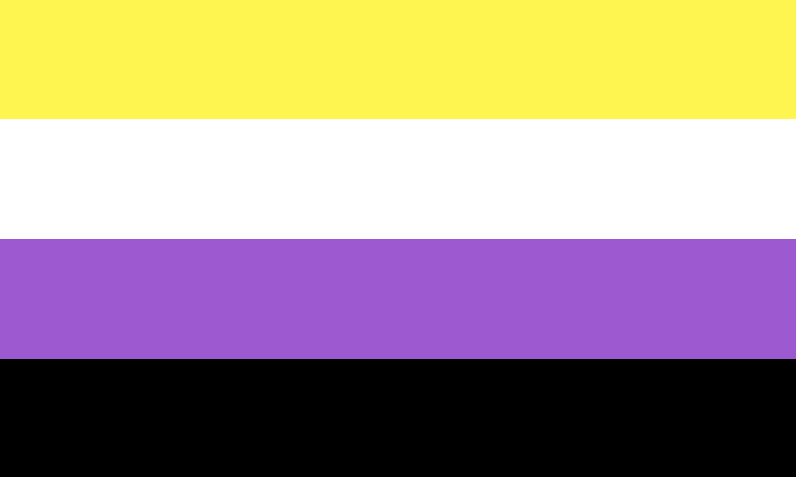
For most of my life I have identified as a she, dressed like a she, behaved as I felt a she would for better or for worse. When I entered the world of practicing counseling as volunteer in 2018, a peer of mine identified as non-binary. They were likely not the first person I met that identified as enby, but they were the most vocal. Initially I felt uncomfortable in response to their loud declarations of how their gender worked. As time went on, we became close friends, and I learned a lot about myself and about the concept of gender in the process.

A few years later, on a balmy pandemic afternoon, I borrowed the aforementioned friend’s clippers and shaved my head. It was probably the most gender-challenging change to my appearance I had engaged in at the time. It was also something I had thought about doing for a long time, I had very short hair in the past, but I wasn’t able to find the courage to go through with it. It felt freeing, and since I wasn’t around many people at the time, in particular family, I didn’t have to deal with the challenges and arduous explanations that I might have felt were required of me.

It wasn’t until a few years later and I moved to New York City, that I was ready to begin using the pronouns they/them in addition to she/her. Part of what supported me in this transition was moving into a sex positive household in Brooklyn. In this environment everyone was encouraged to explore and present however they could see fit in the moment. Roommates and guests walked around in complete drag, totally nude or in some of the hottest lingerie I’ve ever seen up close.

We had ongoing events which provided opportunities to present oneself as varying identities. After sampling some lingerie for myself, I realized it wasn’t quite what I was after and I started scouring thrift shops for something more masculine. I found a sport coat and a fedora and wore them to a New Years Eve party. I loved the way the coat felt like it was hugging me and I’ve always been fond of a nice hat and it just felt right to me. I also was one of the warmer partygoers 😛

What I learned from these experiences is that gender is a unique journey for each of us. I’ve caught flack at times for not being entirely enby and I also notice that there are many of us that chose to fall in different places on the spectrum between she and they and he. There are many invisible intersex folks who have grievously not only been labeled as a binary gender, but also physically altered with painful surgeries in order to ‘affirm’ their place in society. I mourn deeply for these folks.

I continue to experiment with my gender. Every date I go on is an opportunity to decide what kind of flirty person I feel like that day. Each trip to the thrift store isn’t bound as much by the binary sections of clothing organization, but what sizes are available that day. It is my desire to never stop exploring because gender is also not just about presentation, but about how I show up as a human being.

All the politeness and the cattiness that I have participated in as someone socialized female has got to end. It was that very politeness that made me uncomfortable when my dear friend advocated for their own identity. At that time, I was afraid of what might happen if I took up that much space.

As I said earlier, each of us has our own unique tale of gender. So what’s yours?