Categories
A Quest for Healing Power Ravishing Rose Blog

The Power Imbalance of Giving & Receiving

I have to start with Martin & Dalzen’s (2021) Wheel of Consent when I talk about giving and receiving because it highlights the vulnerability and energetic structure of being in different roles of interpersonal exchange. This became apparent to me when I noticed a pattern of women positioning themselves in a relationship towards me as being the giver of care, advice, or mentorship without that being an agreed dynamic. I recognize these behaviours, as much as I have a reaction to judge them, and see them in myself (something I don’t want to look at) as part of a socialized way to feel in control of a situation.

I love being in control. And I, sometimes, recognize it’s illusion: Being ‘better than’ others, having something to offer, feeling of value in a dynamic. I just listened to a recent podcast by Tara Brach about the drive to feel inferior or superior. She has some interesting exercises to reprogram your brain around disconnection and isolation. The positioning of myself as a “giver of care” without fee for exchange (as in a work setting), allows me to feel superior because my health, the measurement at hand, is being communicated as if I were in better condition that the caregivee.

I recognize the urge as my ego and I negotiate who’s in charge. I’ve also learned in past year that, if I catch my ego, it can be a choice on my part as to whether or not to engage in this power struggle. Someone may try to position themselves and if my ego takes over I can physically feel this power struggle in my body, but when I am aware of myself and don’t allow the reactionary action/word/energy to dominate, then I can disengage and remain on an even playing field with the other being.

This is hard in our interpersonal interactions, there’s a lot going on. So I wonder about Brach’s take as she navigates negotiating this power dynamic with other energetic beings such as plants and animals. Our ‘natural setting’ as humans is to dominate these relationships, animals and nature are often domesticated to our habits. What would happen if we simply acknowledge and honour the ways in which our cat takes up space in ways we don’t prefer or a tree root destroys our sewer system? We don’t have to like it, but we can notice that this is how we live in harmony with one another.

It is my desire to grow into being on this earth in a way that honours my surrounding beings. We are all of the same atoms, the same stardust and, I believe, essentially seeking the same harmony of existence. What relationships come to mind for you when you think about this?

Photo by Casey Horner on Unsplash
Categories
A Quest for Healing Intersectional Identity Ravishing Rose Blog

Parts of Me: Elsa

I’ve been feeling stuck lately and having a hard time writing. When I reflect on my stuck feelings…I feel frozen, a sense of impending doom if I make some wrong decision, it’s hard to feel my body and when I do it’s mostly just uncomfortable, my mind wants to take over and SOLVE something but mostly doesn’t know where to begin.

I’ll call this experience of stuckness ‘Elsa’. I feel angry with her at the moment. Elsa is getting in the way of my writing, and I LOVE to write. She’s probably also impeding my ability to do other things that feel important and urgent. Why is Elsa dictating how I spend my time? I refuse to let her win.

But what if Elsa is trying to help in some way? What is Elsa’s core intentions? Most often the parts of me that inhibit action tend to be protective. I identify as both a freezer and a fawner when it comes to high stress situations. These responses are protective measures to keep me safe and stop me from escalating any danger that is happening in my vicinity.

Since the pandemic, my vicinity has felt like it expanded a lot further than the North American bubble that I generally, mentally lived in. Elsa came and went for company. When she went away, I furiously covered the walls of my apartment in paintings like my life depended on it despite not identifying as a mural artist, and I watched and waited as a global disease unfolded. There was a level of connectedness with the rest of the world that had begun through my privileged wanderlust and it was both challenged and solidified through the shutting down and reopening of borders. The mandate that had trapped me on the other side of an invisible wall from most of my family challenged the privilege of border crossing I had experienced the entirety of my life.

Elsa supported me through this experience. She turned my brain off when I became overwhelmed by the things I lost before I was mentally too far outside of my window of tolerance. She kept me company during the many, MANY hours of alone time I experienced during the lockdown since I was living alone at the time. She generally helped me pass the time and likely the tension of her departures helped generate the fire of action that comes forth through me in her absence.

What if Elsa is the precursor to action? As I get older, I realize that often the most challenging part of challenging feelings is the judgement I heap upon myself for having the challenging feels in the first place. An unkind way to respond to someone who is already struggling I know. And then Elsa comes to the rescue to shut it all down. She is the emergency switch that takes brain offline until I can find a little thread of compassion for myself.

Categories
A Quest for Healing Ravishing Rose Blog

When the Mind Wanders Off Leash: The Fantasizing Mind

A handful of recent experiences have led me to reflect upon my relationship to fantasy. You know when a theme keeps popping up in different areas of your life? Time to pay attention? The act of fantasizing is such an interesting exercise and generally considered to be a positive, exploratory or sexy activity, though also considered mysterious and sometimes even dangerous. When we fantasize we might be using our imagination to create future goals for ourselves but we also might be trying to escape whatever discomfort we are experiencing in the moment. Fantasy can be realistic or fantastical, it can be something we truly want or perhaps, and we might not recognize this, it remains pleasant only in confines of our mind. The mind is a truly creative place and a tool that we share across oceans, languages and cultures.

There are a few ways in which I have come to notice fantasy getting the better of me. The first one is believing that a situation or relationship would only be better if this or that were different. If only my friend/boss/partner were a slightly different person, if only we related in this other specific way. This is a trap. They will, very likely, never become that person and this habit of discontent is something that has deeper meaning within me rather than the individual in question.

A second way I’ve noticed fantasy popping up is a little more sadistic. I will fantasize a particular future outcome or vengence if I am in conflict with someone. It has more of a stonewalling or emotional torture type of flavor for me. I caught myself doing this last week with my one of my partners and realized that it was helping me cope with the discomfort of being in conflict. I also recognized that the chances of me following through on this fantasy that took place hours later was pretty slim. The chances of me still being angry about something small after a whole day apart was pretty unlikely.

Finally, the one you’ve been waiting for, using fantasy to explore sexuality. I can’t help but think about the ethics of consent when I think about others sexually cause that’s how I roll. How would this person feel about being a part of my fantasy world? Sometimes we know because we are already in relationship with the person and we can ask directly. There are other times when it’s someone we don’t have a connection with, we might fantasize about them regularly, and it could possibly disrupt a potential connection because, after a certain point, we can have trouble separating fact from fiction.

While fantasy can be fun, relieving and an essential part of creativity, there are ways in which it can wander beyond what aids us in living the life that we hope for ourselves. It is my desire that by identifying the ways in which it might go awry, I can catch myself and start to utilize my fantastical skills for fun, exploration and the deepening of connections.

Categories
A Quest for Healing Bicycles Intersectional Identity Ravishing Rose Blog

Sorting Axle Nuts

Yesterday I sorted axel nuts. A task I initially felt was a waste of time and was I really getting paid to sort? But it reminded me of the beginnings of being a mechanic. Coop days where a volunteers task was to sort. There’s a TON to learn from sorting parts. There are lots of unique differences between axle nuts in fact. There’s also some humility needed since I associate it with the start of my learning and I was divided between nostalgia and ego.

But back to the nuts. There’s obviously size differences and then thread pitch is the next step to consider. But my axle nut chart, {picture to come as reference}, only has so much range with its 6 options (3 difference circumferences and 3 difference pitches). Some nuts were too big and some too small so I could use the discernment of my eye to weed them out in the beginning (e-bikes for the larger nuts and vintage bikes for the smaller). Recently I encountered an axle nut that didn’t fit a 13 or 12 mm wrench in the collection of standard bike tools. “An imperial size,” my spouse chipped in. The nut was so thin and fragile and stuck that an adjustable was mangling it 😥 .

If you’ve enjoyed the article this far, “Congratulations!”, you’re a huge nerd like me. Maybe you like to get dirty, take things apart or some other obscure thing I can’t think of. Feel free to email me about it and I will add you to my email list once I get that going. Where I want to go with all of this is into the human mind. What do axle bolts have to do with the mind?

This kind of focus on the details of small hardware allows me to relax. Paying attention to the feel of the nut screwing onto the chart, using my sight to assess whether it needs to go into another bin for cone parts, and smelling the old grease and grit that coats them all is an immersive experience. The feeling of not being enough being humbled through a simple task of sorting, unlocking a sort of flow or meditative state.

It is through the work of my hands that I can continue to do the work of the mind and I’m often wondering how they are more and more combined in my life. How do bikes fit with therapy? What can I use from my therapy training to assist me as a mechanic? Have they already combined into the opportunities I’ve had, the experiences I’ve made, the communities I’ve mingled with? I desire that you see yourself as whole, through the lens of many combined identities.

Categories
A Quest for Healing Bicycles Intersectional Identity Ravishing Rose Blog

Healing and Bicycles

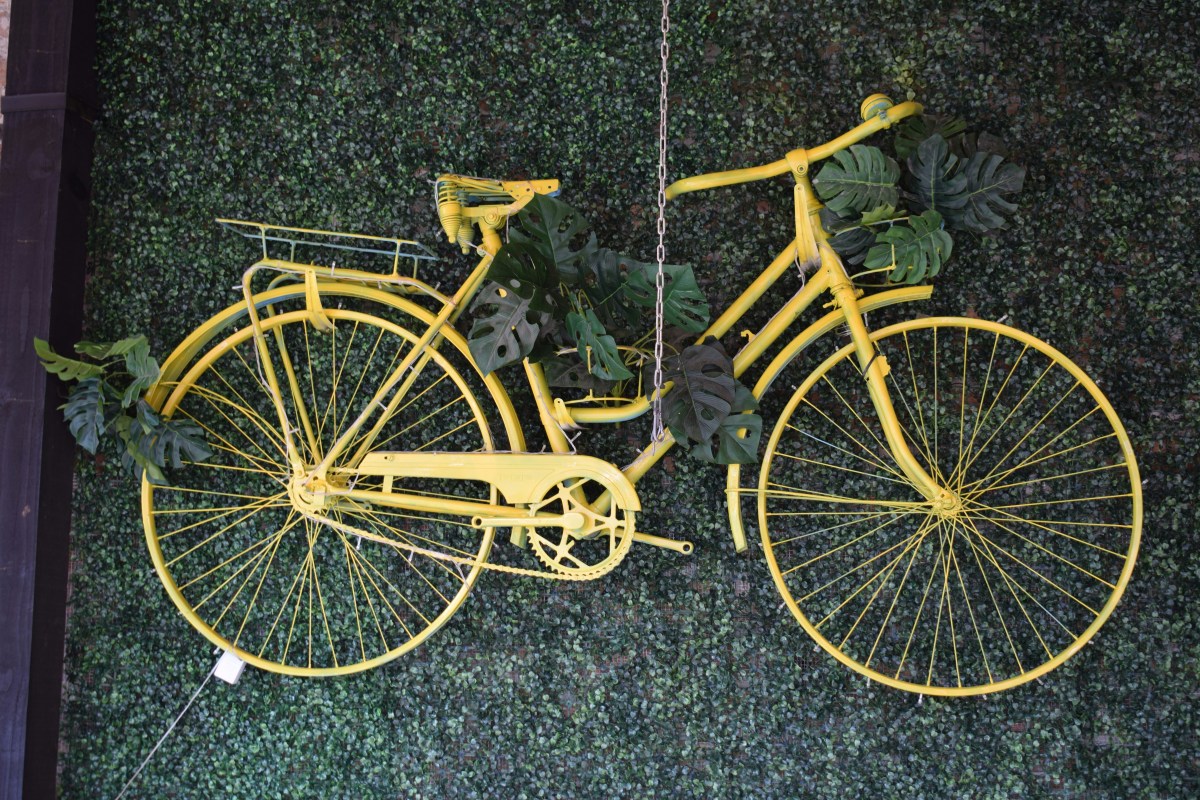
Bicycles have been a part of my life for a long time. Somewhere, my parent’s have a photo of me at 8 or 9 balancing a pool noodle on my helmet while riding. I also fondly recall riding my cat (Sneezy) around my cul-de-sac in my backpack, much to her protesting. But bicycles didn’t become as integral to my life until I started learning how to work on them mechanically. This process began during my undergrad degree where there was a bike cooperative (Right to Move) attached to the downtown campus of my school in Montreal. I still remember going inside the coop for the first time and feeling very out of place, but also curious and intrigued.

It wasn’t until a couple of years later when my path to becoming a professional mechanic was clear. Another city (Toronto) and coop (Bike Pirates) later, a friend of mine named Matt handed me a bike frame with only the cranks and brakes attached and told me to build. I looked at him deploringly and said I didn’t know how. A few days and several hours of laboring later, Esmerelda was born. I sold her off a several years later in Victoria, BC so she may still be rolling around!

I will never forget Esmerelda. After the build, I started bike couriering in Toronto which will also remain an unforgettable endeavour. I remember stopping at my friend Heather’s (former courier) place on my way home from work and lying on her kitchen floor shovelling in some bulk peanuts she just purchased before she politely took the bag away from me. I hadn’t yet learned with how much food fuel was needed to do the kind of riding I was doing.

Having been mugged at gunpoint in Montreal when I was 17, it took me over a decade to recover the sense of safety that I grew up feeling. Having a bicycle to rely on, that I could repair on the spot, was an enormous leap of recovery from this experience.

It wasn’t without many trials and tribulations. My first professional shop mentor was a gentleman that was of similar age to my parents and the intimacy of us working together one on one seemed to get some wrong ideas in his head about our connection. I almost quit, but decided to take the opportunity to put him in his place with my words and see what happened. Despite my remaining disappointment and empathy for my younger self, it was an empowering experience. I ended up remaining and learning what I could before I moved on with the relationship in good standing. But this was only one of many deeply sexist and power abusing experiences that I have endured in the world of bicycles in order to get where I am today.

I never set out to be a mechanic, I never thought I would be a mechanic and I certainly never thought that almost 2 decades after Esmerelda I would still be holding a wrench in my hand. These days I’m wrenching (term for doing bike mechanics) so much that if I don’t stretch before bed my body will wake me up in the night to make me. This may also be an element of aging 😛

I am passionate about teaching others how to do this work. This skill set has given me so much joy, community, connection and empowerment throughout my life. It has helped to build my self-esteem, shaped the way I travel and interact with the communities I’ve lived in, and allowed me a sense of safety and security when exploring new places.

I also see learning these, as well as other types of skills, as therapeutic. Sometimes it is helpful to take abstract work in our minds out into the physical world to labor over with our hands and our eyes until we can make sense of it all. It has long been a desire of mine to combine my work as a therapist with my work as a bicycle mechanic. It is also my desire that you feel capable to learn something that you otherwise thought might not have been possible. If you have a similar experience where a skillset chose you instead of the other way around, feel free to share in the comments below.

Photo by Marija Zaric on Unsplash

Categories
A Quest for Healing Ravishing Rose Blog

Trauma Play

The concept of trauma play was central to my final project during my counseling masters. To some extent, I don’t even know how I arrived on the subject considering I wasn’t aware of this topic until I began to write about it. When it comes up most folx ask me, ‘What is it?’.

For this, I will refer to one of the academic articles I referenced in my capstone by Jeremy Thomas’ entitled BDSM as Trauma Play: An Authoethnographic Investigation. Unfortunately it’s not open source but I have linked the abstract. Thomas opens the article discussing the research around the resilience and strengths of BDSM practitioners, and shares the research that has debunked the myth that kinky folx are any more traumatized than the average demographic.

Thomas goes on to educate us that the origins of trauma play come from play therapy, used with children to process events where language would fall short. Furthermore, he delineates that his definition is specific to personal trauma rather than collective or cultural trauma (that’s a topic for another post). The official definition landing at: “…BDSM activities that adults consensually engage in that are related to past trauma or abuse and fo which the individual is actively aware of this connection.”

What I like about this definition is that it requires not only consent of all the participants involved in this type of play, but consent of the individual with themselves about the choice to take an active role in their healing. Active in that they are an agent of healing, but also active in that they are physically taking action. I am certain that, even for adults, some things cannot be processed by verbal conversation alone and need some creativity and additional approaches. The most common example being purposefully recreating a scene in which the individual was formerly traumatized and experiencing it anew which the proper safeguards to ensure that it does not cause re-traumatization. Here’s a link to my academic blog if you have yet to hear the term ‘aftercare‘ and you’re feeling curious.

Now Thomas has an interesting approach in that, in the article, he revisits his trauma through the experience, and spectacle, of being flogged rather than recreating a unique roleplay scene. The experience of being flogged publicly allows him to safely revisit a former trauma. This demonstrates that there are many ways to go about trauma play. It is PLAY after all. Thomas highlights the ‘somatic reclamation’ he experiences through his play.

The second question I get is, ‘What does a therapist have to do with this type of work?’ Through therapy we can assist with the creation and processing of these experiences to ensure they are as safe as possible. Ethically we do not participate directly in a scene, but we can help flesh out important elements of the creation through discussion and maybe even brief role play if it would be helpful. Additionally, the experience of a scene goes beyond the actual event and there is lots of space to process the work an individual has done to engage in this kind of play.

Trauma play is not for everyone and it’s also not for every kinky person. Kinksters have a variety of reasons and lack of reasons for engaging in their particular pleasures. Like everything, you will know if it’s something that you are drawn to, curious about, want to research further. It is my desire that you have your own journey when healing trauma and that the concept of ‘trauma play’ might open your mind to the possibilities.

Image provided by www.freepik.com

Categories
A Quest for Healing Ravishing Rose Blog

Licensure & Geography

In the world of mental health care there are specific ethical guidelines that outline the ways in which we engage with our clients. Until you are aware of these rules, you might not spend much time thinking about them as a consumer of care. Licensure of particular titles (therapist, counselor/counsellor, psychologist, pscychotherapist) and roles in the realm of mental health care are generally specific to the region of the license; this can be narrowed further than a country and might apply to a particular state or province.

Most of the time, it is the ethical duty of a practitioner to explain their role to you and ensure that you understand to the best of their ability. This usually happens early in the work and may be at a time where you’re already feeling mentally overwhelmed and have diminished capacity to retain information. I thought I would write this post to further my ethical practices by putting this information in a convenient spot for clients to access.

I wasn’t aware of the difference between the terms: psychotherapist, therapist, or counselor until more recently and I’ve been studying psychology since I was a teenager. Part of the reason for this, is that these colloquialisms are used interchangeably and can also have a geographical influence. There are a few guidelines that seem to overlap across continents.

In some countries, the term ‘counselor’ might be used for someone without a license for the region they are practicing in, which is totally legal. They might not have formal academic training, but perhaps gone an alternative route to the development of their skills. In some cases the term ‘therapist’ or ‘psychotherapist’ is protected by the institutions that regulate therapy. Also at times, the terms ‘counselor’ and ‘therapist’ are just used interchangeably with no differentiating characteristics.

When mental health practitioners are licensed in a specific area, that license determines where the clients you are working with have their primary residence. The insurance that you carry as a practitioner will cover any incidents that might occur, the licensing institution will receive any complaints that are made about you, and overall there are systems in place that are legally protecting both sides of the relationship and the business itself.

Depending on the license, there will be language that describes where you are encouraged to practice and where you might be able to practice. Someone I know in California said that their license specified that they can see clients in other countries as long as the local licensing body of the client gives the go ahead. A license from British Columbia, Canada also encourages holders to become familiar with the local licensing rules of the client’s place of residence. Ultimately, you are encouraged to practice within your region.

With the increase in virtual counseling these past few years, this can create some level of complication. There are more digital nomads than before and how are they meant to access counseling if they are often on the move? Or what if you live in a country where the primary language is not your native tongue and you would like to seek a therapist that speaks your first language fluently? There are several circumstances where the practitioner’s duty to care for those requesting it can be called into question.

Ultimately, it is everyone’s obligation to become informed about both the services they are offering as well as consuming. Knowledge can help guide us in the process of having agency over the type of care that we access. I desire to provide care that is transparent and allows the individuals I work with to feel a sense of agency over their healing journey.

Photo by N. on Unsplash

Categories
A Quest for Healing Ravishing Rose Blog

Embracing Desire

Desire can bring up a variety of feelings, stories, questions. Desire is complex. There can be a lot of pressure for desire to look a certain way depending on your history, presentation, identities, social networks and how you move through the world. The word ‘desire’ even makes me feel that it must have to do with sex, but if I go deeper I realize that actually being in touch with what I want is prevalent to every aspect of my life. I’m not sure that sexual desire can be completely separate.

A few years ago I enrolled in a course called ‘Power in Pleasure’, facilitated by a wonderful Canadian coach named, Dawn Serra (https://www.dawnserra.com/). I have a couple of very distinct memories from that course. The first was a powerful speech that we were assigned to listen to by Audre Lorde entitled Uses of the Erotic: The Erotic As Power, which I have linked. Lorde reminded me that I have been deceived about the definition of what is erotic. Pleasure can be found in so many ways and only some of them are sexual. By putting the erotic in a box marked ‘sex’, I am limiting myself enormously and tamping down my power. As a result, one of the first experiences I had that I was able to label as erotic was painting a mural on my living room wall. The amount of pleasure I got out of first painting on the wall, second creating something beautiful and third the visceral feeling of the goopy, wet paint sliding through the paintbrush along the glistening wall…oh my.

Historically, I have felt quite a bit of frustration when confronted with desire. It feels out of reach, perhaps not for me. At times I have felt that other people’s needs and wants should come before my own. Another story that I grappled with is that being in pleasure will lead to being out of control and I might lose whatever perceived grip I have on ensuring my world goes round. Expanding my understanding of the erotic and pleasure helped me to disperse the feeling of scarcity I had and oriented me towards the pleasure I was already experiencing.

Desire can be scary. What if we finally figure out what we desire and then we can’t have it? Or that old trope that we get it, but it quickly slips from our grasp? Sometimes it can feel easier to put desires out of our minds, reassure ourselves that they are for people who are more ‘well-off’, healthier, etc. than us. This way of thinking is always there for you. It can be a warm blanket that you occasionally set aside if the weather is right. These patterns of thinking have served us well, been our comfort food. There’s no need to banish them. What if we invited them to spend a day in the closet?

I desire to continue exploring, understanding and inspiring others to visit desire in all its forms. Whether it’s for a moment, a couple of hours, or any length of time. What is your pleasure today?

Photo by Evie S. on Unsplash

Categories
A Quest for Healing Ravishing Rose Blog

The Work

As we go through traumatic experiences, our brain stores them in pieces in order to keep us safe and we can develop behaviors that are attempts to better understand and make sense of what has happened to us and how to prevent it from happening again. Sometimes we create the circumstances again and again in order to feel a sense of control over them. These resulting habits and behaviors can lead to additional pain and chaos.

My focus is to assist individuals with identifying behavioral patterns that result from traumatic experience and find ways to transform these patterns from harmful to beneficial or even fulfilling experiences. It can be difficult to understand what we are doing when we are inside of these paradigms and how we are contributing to their occurance. We might feel like victims to circumstance. It can therefore be difficult to shift these sneaky habits without an outside perspective to shed light on the nuances of how they play out.

Categories
A Quest for Healing Ravishing Rose Blog

How can talk therapy be somatic (of the body)?

In my own exploration of the self, I have noticed there can sometimes be a disconnect between my mind’s desires and my body’s desires. My mind might say, ‘all is well today let’s keep on keeping on‘ and in the same moment my body will be shrieking that there is a terrible problem that needs rectifying. This can happen in reverse as well. Through the process of trying to understand and harmonize the two, I came across the term somatic to describe the act of harmonizing the mind and the body. This sometimes looks like exercising the mind to connect with the body. Due to my own success with it, my counseling practice makes use of these themes.

But, how does talking elicit bodily sensation? In fact, a therapist can help orient you towards your body’s sensations in conversation and support you in becoming aware of and interpreting your body and her messages. Through the use of exercises to promote bodily awareness and discussion of the results of this work, we can help to develop a shared language through which your body and mind understand one another. This doesn’t mean we can necessarily always control one with the other, but there are ways we can use this knowledge to influence how we feel or perceive.

Sometimes this type of talk therapy can be enough to achieved desired outcomes and folks can move through places they are feeling stuck mentally. Others might find that this type of therapy is a good start and that something even more physical could take them a step further in their restorative journey. There are modalities like dance therapy, music therapy, and art therapy that can help us understand some of those parts of us that aren’t able or ready to be verbal.

At the end of the day, it works if you work it and you will get as much out of therapy as you feel ready to put into it. My desire is to consider the healing journey as one of joy, play and sorrow. Feeling deeply all of the things that this life has to offer. All of them temporary and delicate.

Image by lifeforstock on Freepik