
Categories
Intersectional Identity Power Ravishing Rose Blog

Money as Power

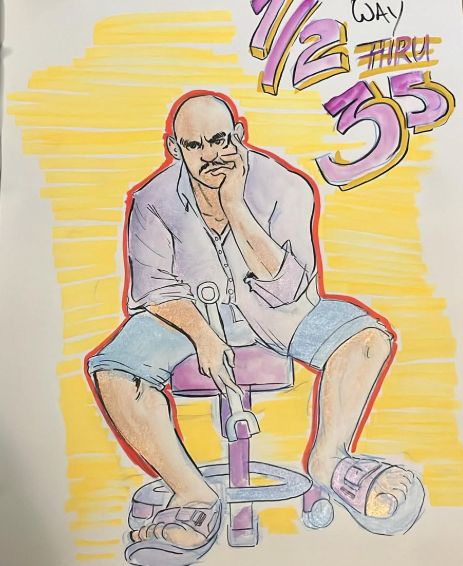
One of the most complex issues that unites humans globally is the concept of money, which makes it even more interesting that it can feel like an off limits topic and often causes quite a bit of conflict in relationships. A lawyer friend said to me recently that people will talk about anything before they want to discuss their finances. In contrast, this beautiful man as well as my business coach spoke transparently about their finances to help educate others on how to navigate starting their own businesses. The first link is about starting a private practice. They both gave us the gift of their vulnerability to help destigmatize monetary conversations and I feel inspired as a result.

This concept of giving feels not only central to my understanding of social justice, but to my experience of the world. I love to give to others, it brings me joy to be able to help someone else out when I am able to. But, there are times where we might not have the resources to give. If we are depressed and have little energy it might even feel that we have nothing to give even to ourselves. This is how I have been feeling of late. Depressed as a result of not having the financial resources to meet my family’s basic needs. As a result, I’ve been having something of a spiritual awakening.

Being in the receiving position can feel excruciating: needing help, asking for help, and even getting what I ask for can be the hardest of all. It comes back to power though doesn’t it? We are in a position of power when we are giving. When we are the one’s receiving, it is a form of submission.

I used to consider myself a submissive person, I was quiet, shy and I enjoyed listening rather than speaking, especially in my formative years. Identifying as a female during this time also furthered my understanding of myself as submissive, the best females were demure and anticipated the needs of others right? It’s only recently that I’ve started to understand and embrace the ways in which I actually have a tendency towards dominance. In fact, perhaps my desire to listen to others rather than share put me in a dominant position. Central to my practice as a therapist is understanding how to balance the power dynamic of holding a client’s information with respect from a position of power due to them not knowing nearly as much about myself.

Part of what balances this power dynamic between therapist and client is money. The client is the provider of financial resource in exchange for the vault and other skills that a therapist provides. One of the most obvious forms of social justice that has occurred to much of the therapy community is providing financially accessible counselling through offering a sliding scale or engaging in some pro-bono work. In my research I have found that the majority of therapists dedicate about 25% of their case load to sliding scale clients.

Recently, my business coach (clearly I’m still fan-girling) broke down the psychology and practicalness of offering a sliding scale in her own business. She experimented by both under and over charging for her services and used this data and her personal budget to calculate the range in which she could afford to charge for her services. The result is that, when people need financial assistance, she negotiates her fees by asking, “What would feel generous, but not cause harm?” Her own harm being caused by charging less than what she has identified as her lower limit.

It is my desire, through this article and generally, to continue to demystify the conversation of money through my own vulnerability, honesty and the practice of actively taking on a submissive role to not only ask for help, but receive the help that is offered to me. May we lean into our own pleasure by accepting the generosity around us and sharing the extra.

Photo by John McArthur on Unsplash

Categories
Power Ravishing Rose Blog

Mentorship

Acknowledgements: Mark Smith, Sharon Glassburn LMFT, Emily Ely Creative

When I was writing my big masters project, I learned about this organization called The Community Academic Consortium for research on Alternative Sexualities (called C.A.R.A.S. by the locals). I love the word ‘consortium’! Writing this behemoth of a paper was really a community effort, not something I could have done on my own. A kinky partnership of mine provided some mentorship and we essentially wrote it together, shout out to Mark!

While I was perusing the C.A.R.A.S. virtual rooms of wisdom, I discovered they had a mentorship program where various professionals could obtain peer support. I applied a year or so later and was matched with a private practice therapist, Sharon Glassburn, that worked within the same community subset that I was interested in (queer, kinky, enm).

Being in community with Sharon has been an immeasurable support while I think about what I’m doing with my maters degree. I used to think it was ‘therapist’ or ‘not therapist’, but being in the thick of being a therapist allows you a more nuanced picture. Having someone to hold you up that’s as thoughtful and compassionate as Sharon when you don’t know how things are going to shake out, and you can’t yet afford to pay someone to lead you, is a gift from the Goddess.

Sharon has taken me on a journey of her own community and a number of folks that she is connected to have made time to talk to me and guide me. I even found a therapist for my husband through this network. Sharon also led me to another really impactful humans that I’ve been in community with at this time: Emily Eley. I’m a total fan girl in NRE right now so pardon my gush!

Emily provides anti-capitalist business coaching and is transparent and vulnerable about her life in her workspace. This type of dynamic makes me feel like I can take my armor off and want to join the conversation. Finances are scary and working with her makes me feel like I’m in a knitting circle slowly taking over the world.

I haven’t been able to pay much for her services and I am inspired and grateful for her explanations of how she makes that work in real time. Financial accessibility is a tricky topic with nuanced psychology. It feels really good to write about her so that I might give back in some way that I have resources at the moment.

Please spread the word about this beautiful people:

Mark Smith

Sharon Glassburn, LMFT

Emily Eley

Photo by Prateek Katyal on Unsplash

Categories
A Quest for Healing Ravishing Rose Blog

What is therapy?

Therapy is depicted in a variety of ways in a media context that may lend itself to a confusing idea of what it’s meant to be. Additional, over time therapy has evolved. You might be familiar with the traditional Freudian version and imagine yourself lying on a couch with a therapist sitting out of sight behind you, listening quietly while you speak about your follies. These days therapy is much more dynamic and can be conducted on the phone, the computer, in a dance studio or even on a bicycle in some cases. After the plague, online options became more available and continue to thrive. This is particularly important to those who live in rural areas or for folks who are looking for specific qualities in a therapist that they have yet to find within their geographic region.

There are all kinds of specialties and types of therapy that are offered, but the majority of therapy is considered ‘talk therapy’ where a licensed, or in some cases unlicensed, therapist offers their professionally trained listening skills in exchange for an agreed upon fee. Many therapists offer a free 15-20 minute consultation so that clients can get a sense of their style and personality and they can both assess whether it might be a good fit.

Some of you might wonder, ‘What does a good fit mean?’. This means that you feel a sense of comfortability when interacting with the therapist that allows you to share as honestly and authentically as you are able about what’s bringing you to therapy. Therapy can be a vulnerable endeavour and is most effective when there is good rapport built between therapist and client.

This is not to say that you won’t be uncomfortable at times during therapy, as you might put yourself outside of your comfort zone in order to make change. You might even feel certain feelings of frustration, attraction, or friendship with your therapist at times due to the nature of the work. In my own experience as a client, I have found that bringing these feelings up to my therapist will often help me navigate them, learn something about myself and determine if it continues to be a good fit for me.

At the end of the day, you are the only one that can know if this is the therapy for you or if this is the right time to give it a go. Booking a consultation can sometimes help clarify these questions for you. You might even notice some increased motivation towards your goals simply by having an appointment on the calendar. As I navigate my own personal work in therapy, I desire to be gentle with myself because I know it is sensitive and vulnerable even just to show up and I trust that I am doing my best just for today.

Image by lifeforstock on Freepik